How should you behave in open water? A swim buoy is one of the best choices, says a water rescuer, who also warns against alcohol
During warm summer days, many of us naturally head out to swim in open water, whether in reservoirs, lakes, rivers or ponds. Even if you are a strong swimmer, you can still misjudge your strength or be suddenly surprised by a muscle cramp, and then things can go wrong very quickly. Alcohol can also play a major role and make the situation significantly worse. We asked Daniel Vičan, a member of the presidium of the Water Rescue Service of the Czech Republic, what types of incidents water rescuers are called to most often and how resuscitation of a drowning person actually works. He also drew attention to an ongoing prevention campaign that can be seen on social media and on Czech Television.
How much does your work increase during the summer months compared with the rest of the year?
Our public-facing work is active roughly from May until the end of September, depending on the weather and the number of people at swimming areas. Outside this period, we train and prepare throughout the year.
What types of incidents are you most often called to?
We are a hybrid part of the integrated rescue system, so we may deal with sinking boats, vessels that have lost the ability to manoeuvre, and of course medical interventions. These include intoxication, nausea, injuries by the water, injuries after falling into water and also drowning. In other words, anything connected with people moving around water.
Are there any basic rules people should follow when they go swimming in open water?
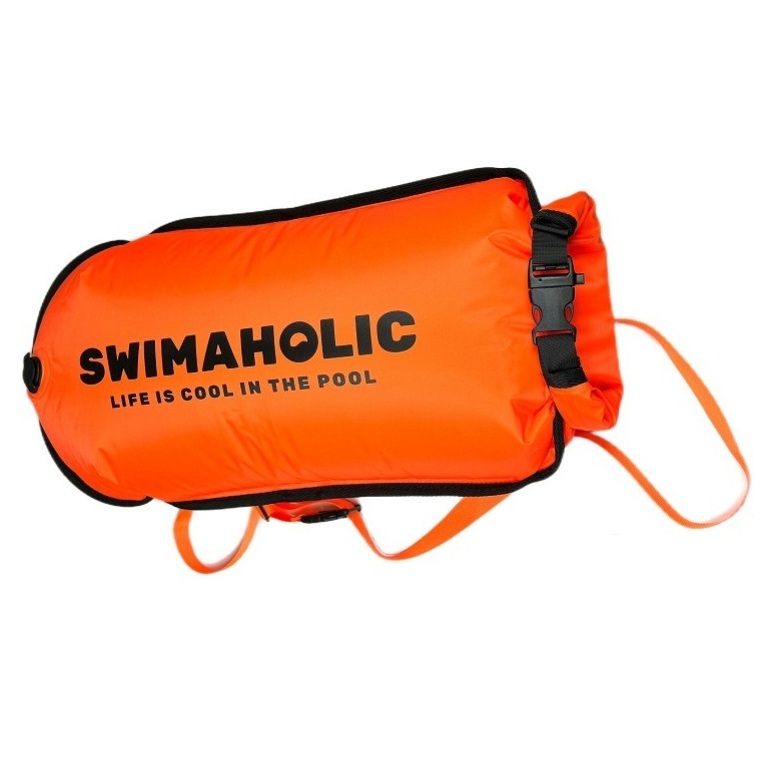
Yes. If you are going into open water, someone should know about it. If you are going to swim in a reservoir, for example, one of the best things to have is a swim buoy. It is reflective and, most importantly, it floats. If you get a cramp, you can hold on to the buoy, rest and deal with the situation more easily.
If I am walking along the shore and see someone drowning, what should I do? Should I call emergency services or jump in after them?
If I see someone drowning, I should definitely call 112, or 155 in Czechia, so that I am not handling the rescue alone. Then I look around to see whether there is anything available nearby, such as a paddleboard, rope, lifebuoy or branch. A direct personal rescue attempt in the water should be the very last option. A drowning person who still has some strength left may try to climb up on you when you reach them, pulling you down in the process. Even a ten-year-old child can seriously endanger an experienced swimmer in that situation.
If a child is drowning, it is very difficult to tell parents not to swim after them, because of course they will want to. But it is always important not to be alone, to shout for help and to call emergency services. If you enter the water, take something buoyant with you, because a drowning person can pull you under.
What does the rescue of a drowning person actually look like?
As water rescuers, we see only a tiny fraction of situations where someone is actively drowning. The reason is simple: speed. Drowning is a matter of minutes. Strength disappears very quickly, and in most cases we take over the rescue once the person is already on land. If someone is already underwater, finding them in a reservoir with dark water can be very difficult. Often, we only see the person after they have been pulled from the water and resuscitation is already in progress.
The priority is to get the person to shore so they are safe. Then the next steps depend on whether they are breathing or not. If they are not breathing, chest compressions need to be started. If they are breathing, they should be placed in the recovery position, and emergency services should still be called. Every drowning or near-drowning incident, even a minor one, deserves medical examination. If water gets into the lungs, it can bring in many pathogens that may cause pneumonia or other inflammation, so the person needs to be checked in hospital. This is sometimes referred to as secondary drowning and can appear within 48 hours, for example when the lungs swell.
The more serious situation is when the person is not breathing. In water-related incidents, cardiac arrest occurs because there is no oxygen in the blood. If we only perform chest compressions, we are circulating blood around the body, but that blood is not oxygenated and does not bring oxygen to the organs. Rescue breaths are therefore important. After pulling the person from the water, we begin with five initial rescue breaths and then continue at a ratio of 30 : 2, meaning 30 compressions and two rescue breaths.
How big a role does alcohol play in drowning cases?
Every third drowning in Czechia is linked to alcohol, or alcohol was one of the contributing causes. Last year, 180 people drowned, and this year we expect the number to be much higher because very hot days have brought an enormous number of interventions. In my opinion, we have already exceeded the whole of last season and we are only halfway through the summer holidays. Compared with European statistics, Czechia stands out especially in the group of young men and alcohol. In cooperation with Czech Television, we have launched a campaign called “Do vody s čistou hlavou”, which can be translated as “Go into the water with a clear head”. Actor Josef Trojan plays a reckless young man who drowns in the end because he failed to be careful and went swimming after drinking alcohol.